You can download a printable version of these instructions from this page.
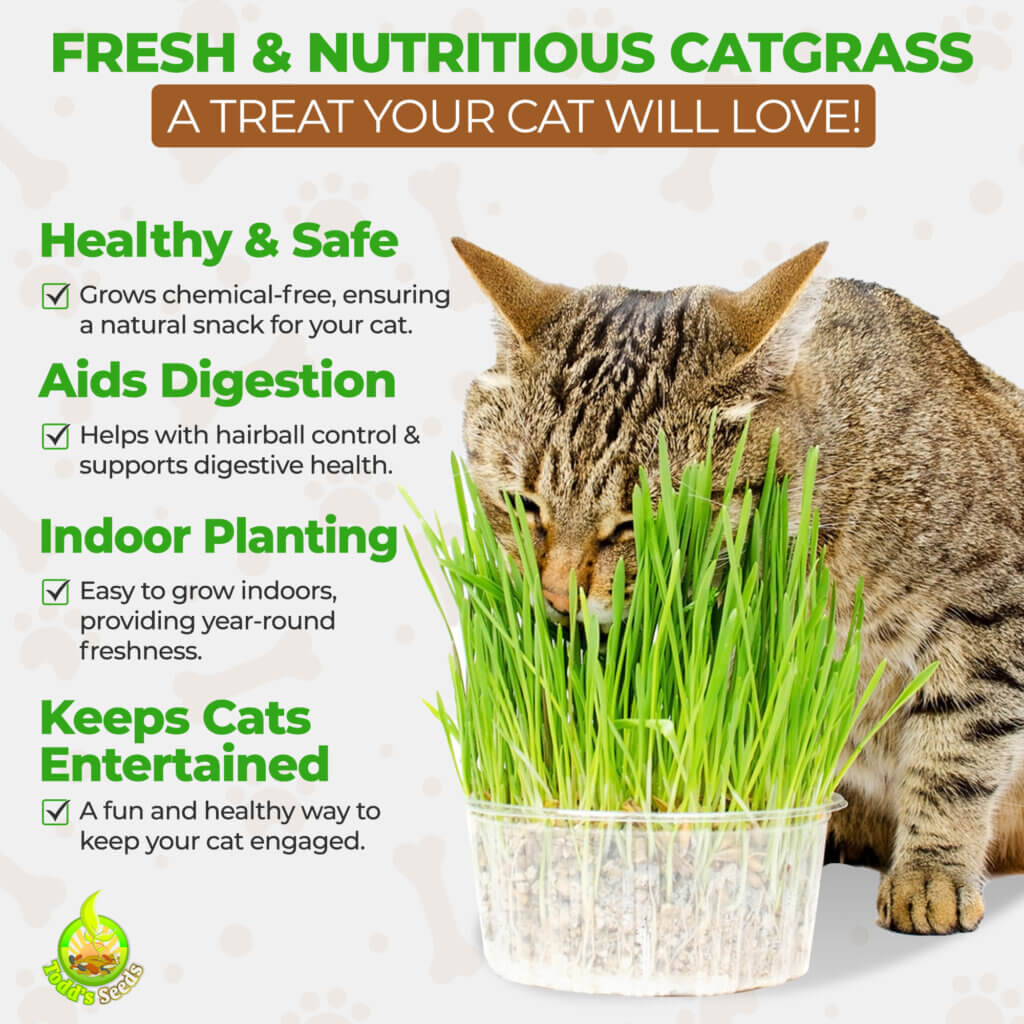
Fresh grass your cat can graze, grown on a windowsill in about a week from a quarter cup of seed. It is one ingredient — whole hard red wheat — and it is genuinely hard to get wrong. Here is the soil way and the no-soil way, plus what to do when it sulks.
What’s actually in the bag
Two ways to grow it
- You need
- A pot or dish and some potting soil
- Seed
- About ¼ cup per 6″ pot
- Soak
- Optional — 8–12 hours speeds it up
- Grazeable
- Day 7–10, at about 4″
- Lasts
- 2–3 weeks of nibbling
- Downside
- Some cats dig, and then you have soil on the rug
- You need
- A shallow dish and paper towels
- Seed
- Enough to cover the bottom in one layer
- Soak
- Recommended — 8–12 hours
- Grazeable
- Day 6–9, at about 4″
- Lasts
- 1–2 weeks, then it tires out
- Downside
- Shorter life, and it can dry out fast
Cover it until the sprouts appear — usually two or three days. Wheat germinates best in the dark and under a cover it holds its moisture, so it comes up thicker and more even. Left open on a bright windowsill from day one it dries out in patches and grows unevenly, and you will assume the seed was bad. A dinner plate, a second pot, a piece of cardboard — anything that blocks the light works.
Five steps and you’re done
Soak
Cover ¼ cup of seed with cool water overnight. Skippable if you are growing in soil, but it does buy you a day.
Sow
Drain, then scatter the seed across 1–2″ of damp soil so the grains sit shoulder to shoulder. Press them down. Do not bury them.
Cover
Put a plate or a second pot on top and leave it somewhere out of the way. Peek once a day and mist if it looks dry.
Uncover
Pale yellow shoots lifting the cover means it is working. Take the lid off, set it in any bright spot, and it greens up within a day.
Serve
At about 4″ it is ready. Put it down somewhere your cat already likes to sit, and let them find it.
What each day looks like
The two methods in full
- Soak ¼ cup of seed in cool water for 8–12 hours (optional, but it gains you a day).
- Fill a 6″ pot or a shallow dish with 1–2″ of damp potting soil and level it off.
- Scatter the drained seed across the surface in a dense single layer, grains touching. Press them in and mist.
- Cover with a plate or a second pot until sprouts appear, usually 2–3 days, misting if the surface dries.
- Uncover on day 3, move to any bright spot out of hot direct sun, and water lightly every day or two.
- Serve at about 4″, usually day 7–10.
Use a heavy, wide, low pot. A tall narrow one gets tipped over roughly nine seconds after your cat discovers it.
- Soak the seed 8–12 hours. Not strictly required, but it gets you going a day sooner.
- Line a shallow dish or food container with 3–4 layers of damp paper towel.
- Drain the seed and spread it in one even layer across the towel. It should cover the bottom without piling up.
- Cover until sprouts appear, 2–3 days, checking daily that the towel is still damp.
- Uncover, move to a bright spot, and add a splash of water whenever the towel starts to dry.
- Serve at about 4″, usually day 6–9.
Roots knit into a mat you can lift out in one piece. Very tidy, but it dries out faster and tires out sooner than soil.
Who else in the house will eat this
| Pet | How they take it | Notes |
|---|---|---|
| Cats | Graze standing over the pot | The whole reason you bought it. Some cats nibble a blade a day, some mow a pot flat in an afternoon. Both are normal cat behaviour |
| Dogs | Enthusiastically, all at once | Many dogs love it. Offer a handful of cut blades rather than the pot, or it disappears in one sitting |
| Rabbits | Cut and offered fresh | Snip a small handful and add it to their greens. Introduce slowly, like any new fresh food |
| Guinea pigs | Cut, a small handful | Popular. Same rule — small amounts at first, then work up |
| Hamsters, gerbils, rats, mice | A few blades at a time | Tiny portions. A single pot lasts a small rodent a very long time |
| Parrots and small birds | Whole pot, in the cage | Foraging and shredding as much as eating. Put the pot in and let them wreck it |
| Tortoises & chickens | Cut or grazed | Chickens will clear a tray and treat it as a personal insult if you fence it off. Tortoises vary a lot by species — grazing tortoises eat grass readily, others want broadleaf weeds instead, so check what yours should be eating |
For every animal on this list, grass is a supplement and never a replacement. Rabbits and guinea pigs in particular must still get unlimited hay — grass does not substitute for it. Introduce any new fresh food gradually and in small amounts, and check with your vet before offering it to reptiles, exotics, or any pet on a restricted diet.
One pot gives you two to three weeks of grazing, and a cat that has just discovered fresh grass can strip it a lot faster than that. Start a new pot every week or two and you will never be caught without one. It costs about ten minutes and a quarter cup of seed. Growers who do this stop thinking about it entirely — there is simply always a green pot on the windowsill and a slightly older one on the floor.
Getting the most out of a pot
- Put it where the cat already is. A sunny spot they nap in beats a shelf you chose for them.
- Trim it to 4–6″ with scissors if it gets tall and floppy. It comes back thicker and stands up better.
- Cut blades work too. Snip some into a food bowl for a cat that ignores the pot but eats anything in a dish.
- Water from underneath once it is up — a splash in the saucer — so the blades stay dry and the pot stays fresh longer.
- Rotate it a quarter turn every couple of days if it is leaning toward the window.
- Two pots, two rooms is better than one big one, especially in a multi-cat house where one cat guards things.
- Retire it when it yellows. Grass past its prime gets tough and stops being interesting.
- Compost the spent mat — soil, roots and all. It breaks down fast, and it is just wheat.
Something went wrong
| What you see | Why it happens | What to do |
|---|---|---|
| Patchy, thin, sparse | Almost always too little seed, or no cover early on. Uncovered, the surface dries in patches and germination goes uneven. | Sow more heavily — the grains should sit shoulder to shoulder across the whole surface — and keep it covered until the sprouts show |
| Tall, pale and flopping over | Left covered too long, or not enough light after uncovering. The blades stretch looking for it. | Uncover as soon as the shoots lift the cover, and move it somewhere brighter. Trim floppy grass back to 4″ and it regrows sturdier |
| White fuzz around the seeds | Usually harmless root hairs — a fine white halo on the roots themselves, right at the seed. Mold is different: grey or blue-green, cobwebby, sits on top of the seed rather than on the roots, and smells musty. | Root hairs need nothing. For anything musty or grey-green, throw the pot out — do not let a pet at it. Next time use less water, more airflow, and a shallower layer of seed |
| Smells sour or swampy | Standing water. There is no drainage, or the dish is being topped up faster than it dries. | Use a pot with drainage holes, or water far more sparingly. Damp, never wet. If it already smells, start over — it will not recover |
| Nothing came up at all | Seed that dried out during germination, or water hot enough to cook it. | Use cool water, never warm. Keep the surface damp the whole first three days — that is when a dry-out is fatal |
| Yellowing after a week or two | Perfectly normal. It is an annual grass living out of a small pot, and it has reached the end. | Compost it and start the next one. This is the point of sowing a fresh pot every week or two |
| Cat digs in the pot | Loose soil in a shallow container looks a lot like a litter box. | Top the soil with large smooth river stones — big enough that they cannot be swallowed — so blades come through but paws cannot dig. Or switch to the no-soil method entirely |
| Cat ignores it completely | Some cats need an introduction, and some genuinely are not interested. | Try snipping a few blades into their food bowl, or move the pot to where they already nap. Give it a week or two — plenty of cats come around late |
Common sense with pets
- This is food-grade wheat seed with nothing on it — no coatings, no fungicide, no dye. That is exactly what you want for something a pet eats, and it is why lawn or garden grass seed is not a substitute.
- Grow it indoors, out of reach of anything you spray or treat.
- Introduce it gradually and in small amounts, like any new fresh food.
- Keep the pot clean. Throw out anything mouldy, sour-smelling or slimy rather than letting a pet decide.
- Grass is a snack, not a meal, and never a replacement for hay or any part of a normal diet.
- Some animals overdo a new favourite and it comes back up. An occasional episode is common; if it is repeated, or your pet seems unwell, stop offering it and call your vet.
- If your pet is on a special diet or has any medical condition, ask your vet before adding anything new.
Questions we get a lot
Reseal it and keep it cool, dark and dry. A pantry is fine, a freezer is better, and a garage in summer is the one place to avoid. Never put damp or soaked seed back in the bag.